Home›Blog ›X-ray Image Intensifier for Industrial Nondestructive Testing
X-ray Image Intensifier for Industrial Nondestructive Testing
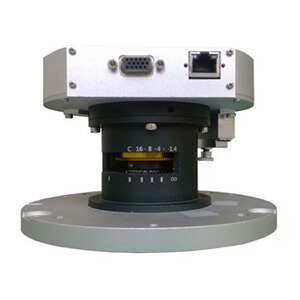
X-ray Image Intensifier for Industrial Nondestructive Testing Core Features
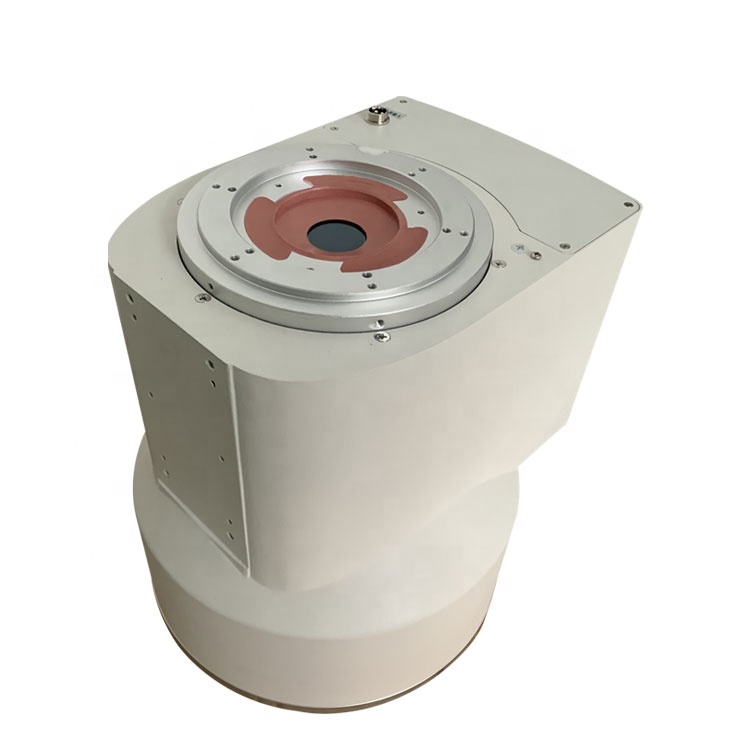
It adopts a “reduced imaging” structure with a large input screen and a small output screen, delivers high brightness gain to support real-time dynamic observation, requires low radiation dose without a darkroom, and features a wide object plane to adapt to large workpiece inspection.
Core Technical and Structural Characteristics
Wide Object Plane with Low Magnification Design: The large-sized input screen covers large workpieces, while the small output screen achieves a typical compression ratio of around 10:1. As an image reduction tube, it cannot use an optical lens to pre-reduce the X-ray beam.
High Brightness Gain Mechanism: The input screen (using CsI·Na and other fluorescent materials) converts X-rays into visible light. After electrons are emitted from the photocathode, they are accelerated by electrostatic focusing and bombard the output screen, boosting brightness by thousands of times. This design supports direct human eye observation or camera image acquisition.
Low-Dose Real-Time Imaging: It only requires 1/10 of the X-ray dose needed for film radiography and 1/50 of that for traditional fluorescent fluoroscopy. No darkroom processing for negatives is required, enabling second-level real-time defect observation and dynamic process monitoring.
Balance Between Anti-Geometric Distortion and Resolution: Optimized for large industrial workpieces, its spatial resolution can reach ≥50lp/cm in some models. Although there is edge distortion, the central area delivers clear details, making it suitable for detecting internal pores and cracks in welds and castings.
Industrial Application Advantages
X-ray Image Intensifier for Industrial Nondestructive Testing Efficiency Improvement: It eliminates the film developing process, significantly speeds up inspection, and supports online continuous testing and integration with automated production lines.
Flexible Deployment: With a relatively compact structure, it can be easily coupled with portable X-ray machines, adapting to on-site mobile inspection scenarios such as pipelines and pressure vessels.
Strong Signal Compatibility: The output visible light image can be easily coupled with CCD/CMOS cameras, converted into digital signals for storage, post-processing and AI defect recognition.
Limitations and Current Status Notes
Image Distortion: There is barrel distortion at the edges, which requires optical correction or software algorithm compensation. Its geometric linearity is not as good as that of Flat Panel Detectors (FPDs).
Technology Iteration Trend: It is gradually being replaced by amorphous silicon/amorphous selenium flat panel detectors in the high-end static high-resolution field. However, it still has unique cost-effectiveness and real-time performance advantages in high-frame-rate dynamic fluoroscopy scenarios, such as moving part inspection and interventional flaw detection.
Author:Image Intensifier
Product Category
News
Contact us
Tel: +86 19015366638
Whatsapp: +86 19015366638
Email: newheekcn@163.com
Company: Weifang Newheek Electronic Technology Co., Ltd.
ADD: E Building of Future Star Scientific Innovation Industrial Zone of No.957 Wolong East Street, Yulong Community, Xincheng Sub-District Office, Weifang Hi-tech Zone, Shandong Province, China